Real-Time Multiplayer Interaction System — Brawl-Style Web Game
Exploring synchronized multiplayer experiences using real-time networking and physics-based gameplay.
Duration
1 month
Reading Time
3 min read
Exploration into interaction design and technical implementation.
Context
The project was initiated as an exploration into multiplayer interaction design and real-time system synchronization. A key focus was understanding how multiple users can share a single digital environment while maintaining responsive gameplay, consistent physics behavior, and seamless player communication across networked sessions.

Approach & Contributions
- — Designed and implemented multiplayer room and lobby architecture using PlayroomKit
- — Developed synchronized player interaction systems powered by WebSocket-based networking
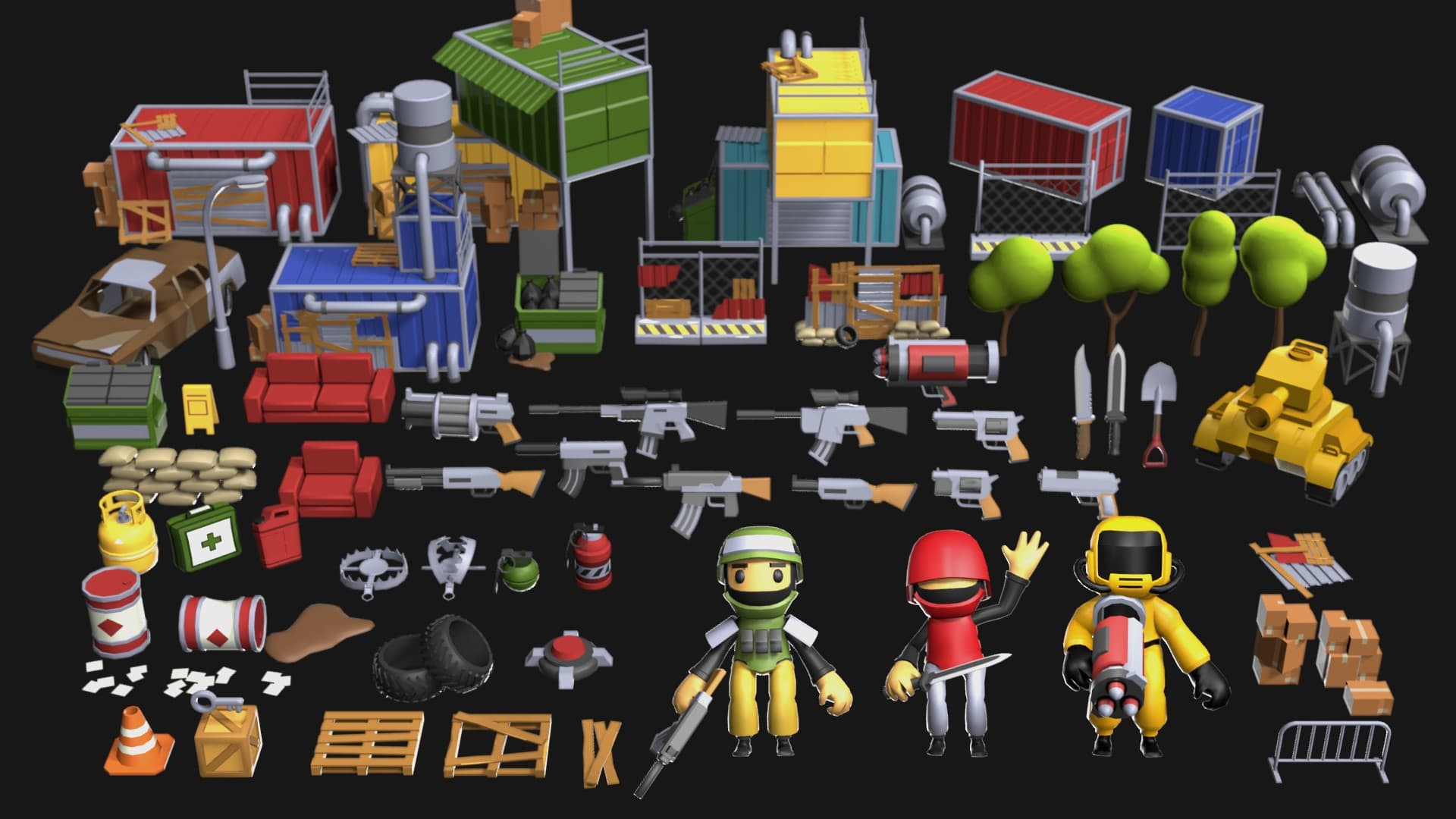
- — Created modular character and environment assets using Blender
- — Engineered physics-based movement and interaction systems using Rapier Physics
- — Designed real-time player state synchronization including movement, interaction, and session lifecycle logic
- — Built scalable global state management using Zustand for predictable gameplay behavior
Execution
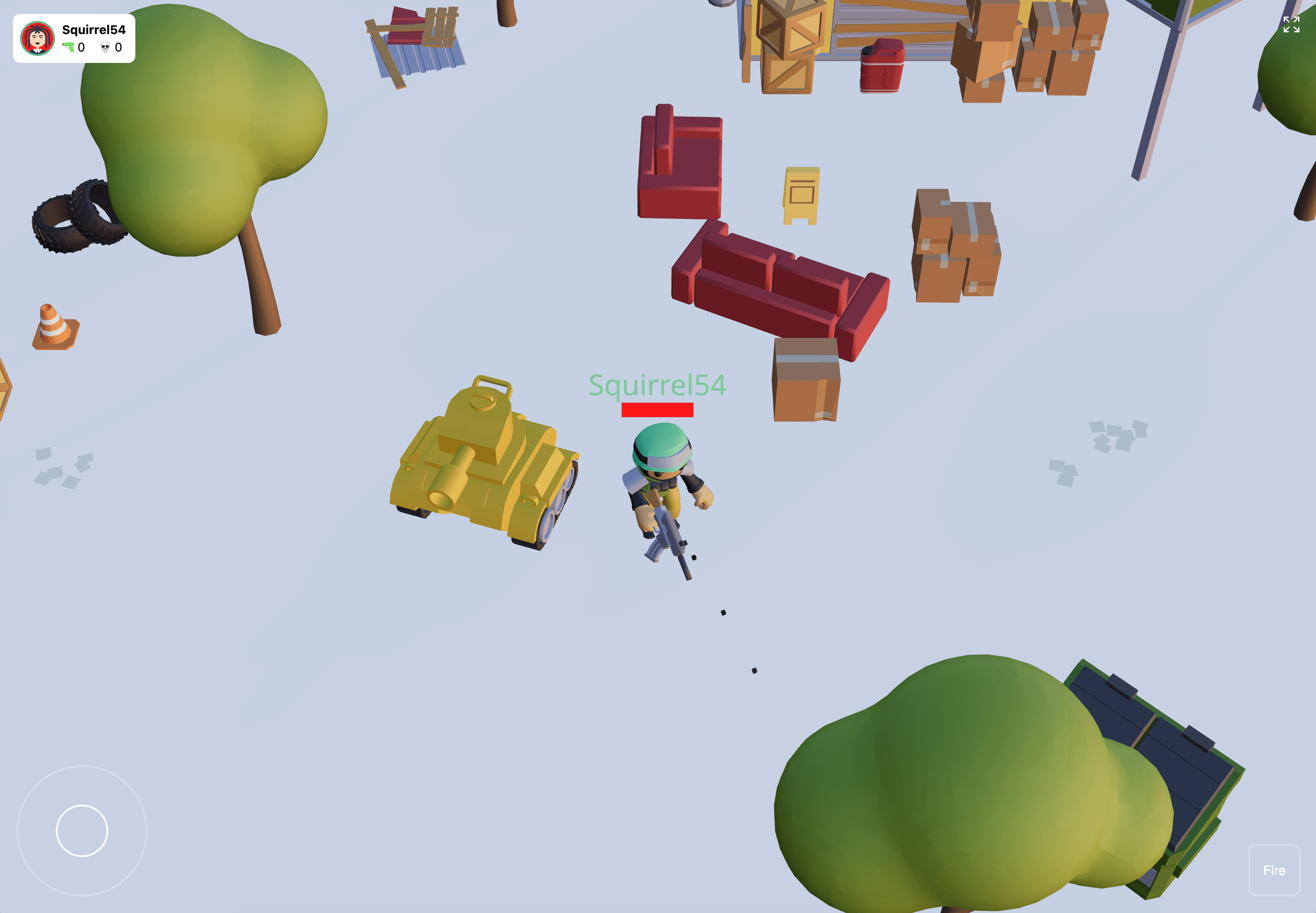
The gameplay environment was designed to prioritize responsiveness and real-time feedback. Physics interactions were used to create natural movement and environmental response, while networking systems ensured player actions remained synchronized across sessions. The system architecture was structured to support rapid session creation, player join/leave scenarios, and continuous gameplay loops without interrupting the overall user experience.
Outcome & Learning
The project successfully demonstrated how browser-based multiplayer experiences can be built using modern WebGL rendering, real-time networking, and physics simulation. It strengthened my understanding of distributed state synchronization, latency-aware interaction design, and collaborative environment architecture. The experiment also expanded my ability to bridge visual design, interaction design, and technical implementation within immersive digital experiences.